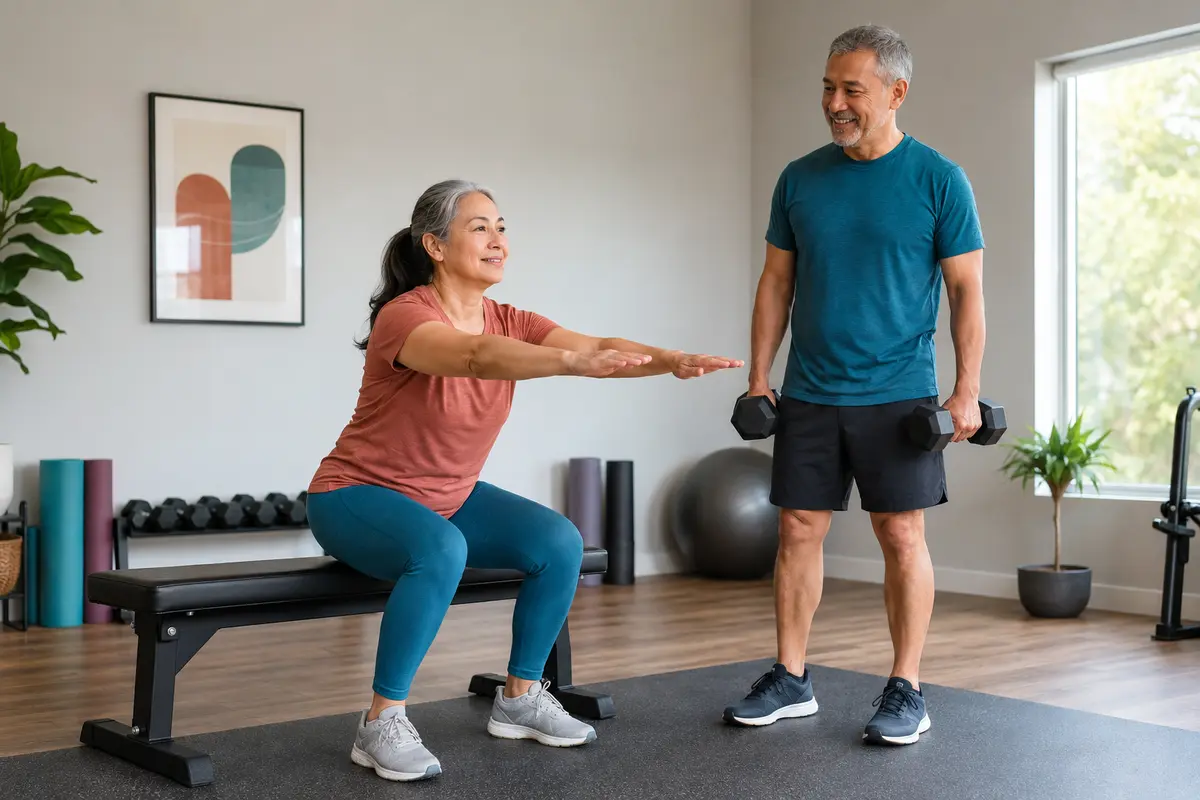
Strength after 50 should serve your daily life—not compete with it.
The practical foundation
Four ideas worth taking with you
This guide keeps the useful message from the original report while replacing absolute claims with evidence-informed, individualized language.
01
Train for the life you want to keep living
Active aging is not about pretending your body has not changed. It is about building strength, balance, mobility, and endurance that support real life—from stairs and groceries to travel, hobbies, and time with family.
Function is the goal. Exercise is one of the tools.02
Give your muscles a reason to stay
Age-related losses in muscle and strength vary widely and are not completely predetermined. Regular resistance training, adequate nutrition, recovery, and medical care can help preserve—and often improve—strength and physical function.
Progressive does not mean extreme. Add challenge gradually.03
Make protein personal, not automatic
The PROT-AGE position paper suggests roughly 1.0–1.2 grams of protein per kilogram per day for many healthy adults over 65, with individual needs varying. Kidney disease, other medical conditions, appetite, activity, and total food intake all matter.
Use ranges as conversation starters—not universal prescriptions.04
Protect function during weight loss
GLP-1 medications can be effective treatments when appropriately prescribed, but weight loss can include lean tissue as well as fat. A clinician-guided plan that includes appropriate nutrition and resistance training can keep strength and function in the conversation.
Never start, stop, or change medication based on a website or podcast.
A better scorecard
Track more than the scale
Body weight can be one data point, but active aging is also about what your body can do. Choose two or three markers that connect to your daily life.
01Strength
Chair stands, resistance used, or controlled repetitions.
02Stamina
Walking time, recovery, or how stairs feel.
03Balance
Confidence during turns, steps, and supported practice.
04Daily life
Carrying, getting up, travel, hobbies, and independence.
Your 30-day experiment
Build consistency without rebuilding your whole life
These are flexible weekly focuses, not a medical or personalized exercise prescription. Keep the effort appropriate and use the exercise guides for movement options.
Week 1
Find your baseline
Complete two manageable strength sessions and notice which movements feel steady, limited, or uncertain.
Week 2
Repeat before adding
Repeat the plan. Improve one small thing: control, range, one repetition, or a little resistance.
Week 3
Support the work
Anchor four or five meals around a protein-rich food that fits your preferences and medical guidance.
Week 4
Measure real-life function
Review stairs, carrying, balance, energy, and confidence—not only body weight or appearance.