The Bottom Line First: Why Generic Apps Can Miss the Mark
If you have ever downloaded a diet app only to feel like it was designed for a 22-year-old with different goals, recovery needs, and health considerations, you are not imagining the disconnect. Many general-purpose apps focus heavily on calories and weight while giving less attention to the priorities that become increasingly important with age: preserving muscle, eating enough protein, maintaining strength, and accounting for medications or health conditions.
That does not mean everyone over 50 has the same metabolism or needs the same plan. It means age, activity level, health history, food preferences, and medications deserve a place in the conversation. We are not simply younger adults with more candles on the cake. We need a strategy built for the body and life we have today.
From “Senior Fitness” to Active Aging and Functional Longevity
The fitness industry is finally catching up to what many of us already know: adults over 50 do not want to be defined by a label or limited to one kind of exercise.
The American College of Sports Medicine ranked Fitness Programs for Older Adults as the number-two fitness trend for 2026. ACSM also noted that programs framed around active aging and functional fitness can feel more relevant than traditional “senior fitness” language.
The goal is not to train like a 25-year-old or to settle for a routine that never progresses. It is to build the strength, balance, mobility, and endurance that support real life: getting up from the floor, carrying groceries, traveling, playing with grandchildren, and remaining independent for decades to come.
Exercise is not punishment. It is a tool for a fuller life.
The Sarcopenia Reality: Muscle Supports Independence
Sarcopenia is the age-related loss of muscle mass, strength, and physical function. It can begin gradually in adulthood and accelerate later in life, especially during long periods of inactivity, illness, or inadequate nutrition.
Some research describes muscle loss after about age 50 in the range of 1–2% per year, while other sources report more conservative averages across the decades. The exact rate varies widely. The important point is that muscle loss is not completely predetermined. Strength training, adequate nutrition, physical activity, recovery, and medical care can slow the decline—and many adults can regain meaningful strength and function.
Two tools matter enormously:
- Protein-forward eating: Older adults often need more protein than the basic amount intended only to prevent deficiency. The PROT-AGE Study Group recommends at least 1.0–1.2 grams per kilogram of body weight per day for many adults over 65, with higher needs possible for active people. Your personal target may differ, particularly if you have kidney disease or another medical condition, so confirm it with a qualified clinician.
- Progressive strength work: Your muscles need a reason to stay. Federal activity guidance recommends muscle-strengthening activity for all major muscle groups at least two days each week. Progressive does not have to mean extreme; it can mean adding a repetition, improving your control, or gradually using more resistance.
Muscle is part of the currency of independence. When you protect your strength, you invest in your future mobility and confidence.
The GLP-1 and Medication Consideration
GLP-1 medications can be valuable, evidence-based treatments when prescribed and monitored appropriately. They can produce substantial weight loss and improve important health measures. But weight loss is rarely made up of body fat alone.
Research on GLP-1 medications shows that some people also lose lean mass, although the amount varies considerably across studies and individuals. Newer evidence suggests fat loss usually makes up the larger share, but preserving muscle remains especially important for adults who are already at greater risk of sarcopenia.
The practical response is not to fear the medication or change it on your own. It is to work with your prescribing clinician and support your treatment with:
- An individualized protein target and enough overall nutrition
- Resistance training that matches your joints, balance, and current ability
- Hydration, sleep, and recovery
- Monitoring of strength, energy, and function—not only the number on the scale
If you take a GLP-1 or another medication that affects appetite, blood sugar, blood pressure, or body weight, your nutrition and exercise plan should complement your medical care, never replace it.
A Simple 30-Day Strength and Consistency Challenge
Consistency beats complexity. You do not need a complicated two-hour gym routine to begin. For the next 30 days, focus on three foundations:
Nutrition
Improve four to five meals each week by making protein the anchor. That might mean adding Greek yogurt at breakfast, chicken or beans at lunch, fish at dinner, or a protein-rich snack that fits your needs. Build gradually rather than trying to overhaul every meal at once.
Movement
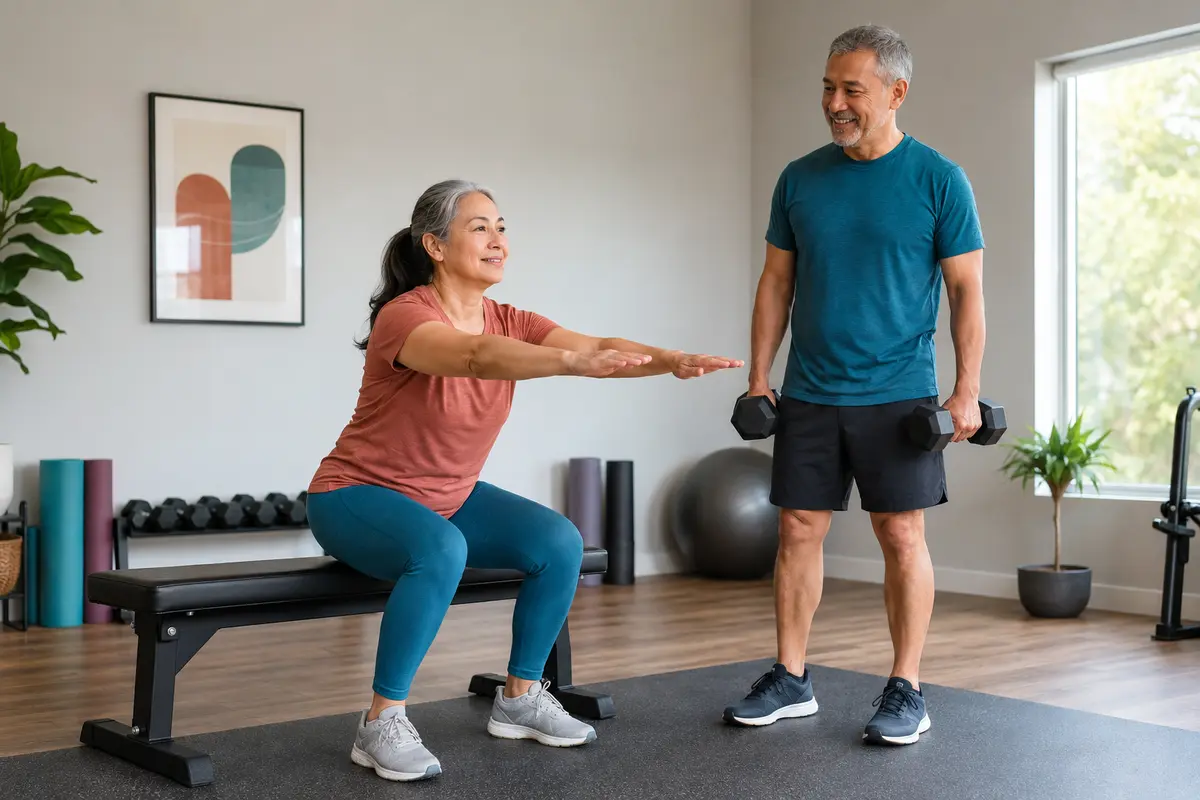
Aim for three to four movement days per week, including at least two joint-appropriate strength sessions if your health allows. Walking, swimming, cycling, balance work, and mobility can fill the other days. Start at a level you can repeat next week.
Mindset
Measure consistency, not perfection. Track the sessions and protein-forward meals you complete. Missing one day does not erase your progress; return to the plan at the next opportunity.
Keep it simple. Keep it joint-conscious. Keep moving forward.
Introducing NutriPlanPro 50+
NutriPlanPro 50+ was built to make nutrition after 50 feel clearer and more personal. Instead of treating every user the same, it brings the priorities of active aging into one straightforward experience.
Features include:
- Onboarding that considers medications, health conditions, goals, and activity level
- Photo-assisted meal logging to reduce the friction of tracking
- Protein-forward targets designed to support lean muscle
- Personalized meal plans and practical food substitutions
- Weight and activity tracking in one place
No app can diagnose a condition, prescribe medication, or replace a registered dietitian or physician. NutriPlanPro 50+ is a planning and education tool designed to help you make more informed daily choices alongside the care you receive from qualified professionals.
NutriPlanPro 50+ is free to start on Google Play, with iOS coming soon.
Let’s stop guessing, protect the strength we have, and build the capacity we deserve. Learn more at Over50FitLife.com.
Research Sources
- American College of Sports Medicine: Top Fitness Trends for 2026
- National Institute on Aging: How strength training can build healthier bodies as we age
- NIH News in Health: Slowing Sarcopenia
- PROT-AGE Study Group position paper on protein needs in older adults
- U.S. Physical Activity Guidelines for Americans, Second Edition
- Review of GLP-1 receptor agonists and body composition
- Systematic review of GLP-1 medications and lean body mass