
Nutrition after 50 should not feel like a punishment, a math test, or a temporary diet. It should help you preserve muscle, maintain steady energy, support your bones and heart, and keep doing the things that make life enjoyable.
That is the Over50FitLife philosophy: eat to build capacity, not simply to make your body smaller.
There is no single perfect menu for every adult over 50. Your needs depend on your health, activity, medications, appetite, food preferences, and goals. But a few practical principles can make healthy eating much easier to understand—and much easier to sustain.
Start With a Practical Plate, Not a Perfect Diet
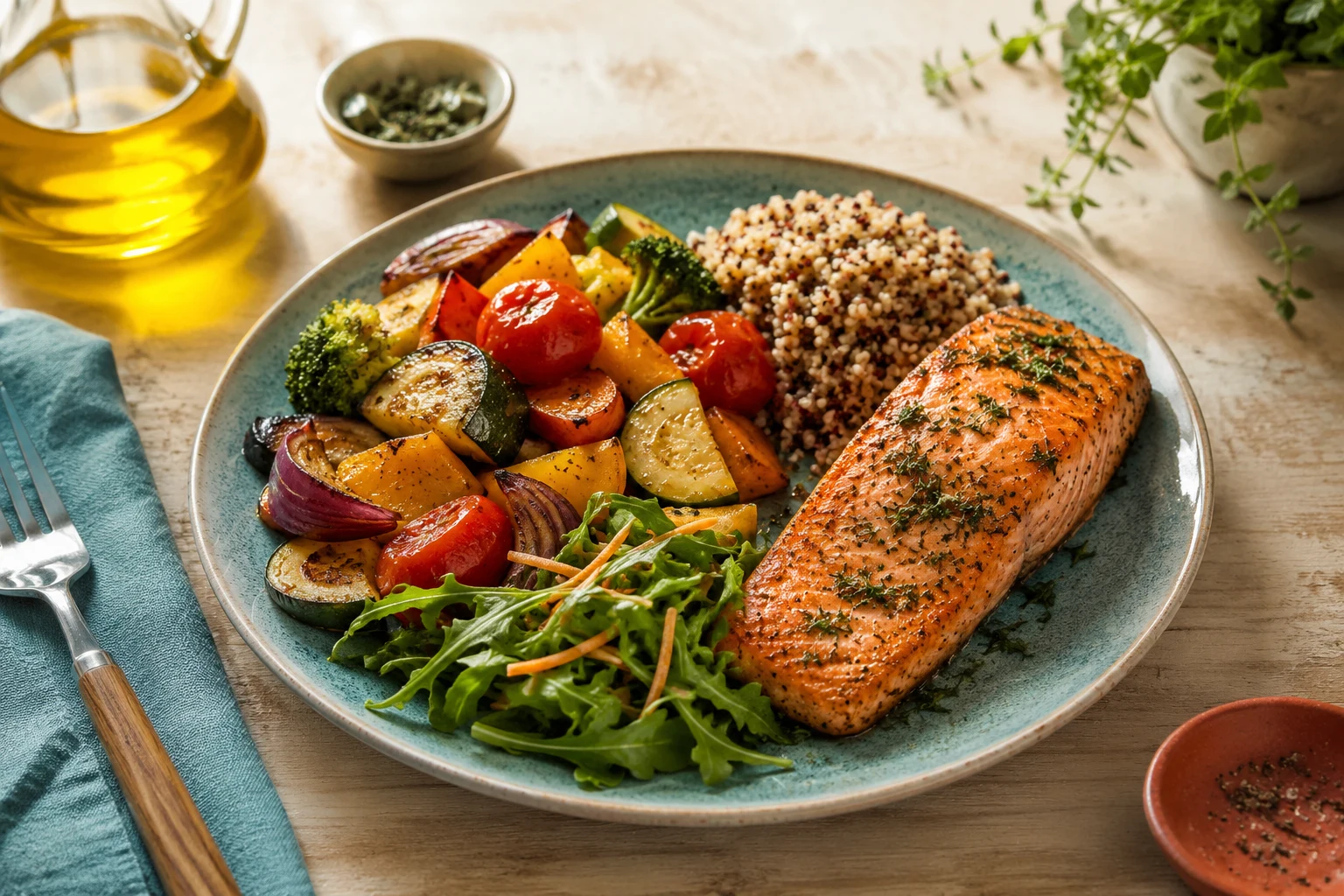
When you do not know what to make for lunch or dinner, use this simple visual starting point:
- Fill about half the plate with colorful vegetables such as greens, broccoli, peppers, carrots, tomatoes, green beans, or squash.
- Give protein a prominent place with fish, poultry, eggs, Greek yogurt, cottage cheese, tofu, beans, lentils, or lean meat.
- Use the remaining space for a whole-food carbohydrate such as potatoes, oats, brown rice, quinoa, beans, fruit, or whole-grain bread.
- Add a modest amount of unsaturated fat from foods such as olive oil, nuts, seeds, avocado, or fish.
This is a guide—not a rigid formula. A highly active person may need more carbohydrate. Someone with a smaller appetite may need more calorie-dense foods. A quarter of a plate may not provide enough protein for every person or every meal. NutriPlanPro 50+ helps personalize those amounts instead of treating the plate like a universal prescription.
Principle 1: Make Protein the Anchor
Protein provides the amino acids your body uses to maintain and repair tissue. That matters at every age, but it becomes increasingly important as we work to protect muscle and function later in life.
Current research commonly suggests that many healthy older adults may benefit from roughly 1.0–1.2 grams of protein per kilogram of body weight per day, with individual needs sometimes higher during regular training, illness, or recovery. A 2025 review also describes balanced servings of approximately 25–30 grams at a meal as a useful practical target for many older adults.
Those numbers are not appropriate for everyone. Kidney disease, liver disease, appetite changes, and other medical conditions can change your needs. Ask your physician or a registered dietitian for an individualized target when you have a medical concern.
The most useful habit is simple: look at each meal and ask, “Where is my protein?”
Easy Protein Anchors
- Eggs with Greek yogurt at breakfast
- Tuna, chicken, tofu, beans, or lentils at lunch
- Salmon, poultry, lean meat, tempeh, or legumes at dinner
- Cottage cheese, yogurt, edamame, or a medically appropriate protein shake when a snack is needed
Spreading protein through the day is generally more practical than arriving at dinner with nearly your entire target still unmet.
Principle 2: Let Color Do Some of the Work
Vegetables and fruit provide fiber, vitamins, minerals, and a wide range of plant compounds. The National Institute on Aging recommends choosing a variety of nutrient-dense foods because many older adults need plenty of nutrients even when their overall calorie needs are lower than they once were.
You do not need an exotic superfood. Frozen vegetables, canned vegetables with less sodium, bagged salads, berries, apples, oranges, and pre-cut produce all count. Convenience is not cheating; it is often what makes consistency possible.
Try to add color rather than focusing only on what you think you must remove.
Principle 3: Use Carbohydrates as Fuel
Carbohydrates are not automatically the enemy. They fuel walking, resistance training, cycling, gardening, travel, and everyday movement. The goal is to choose portions and sources that support your energy, blood-sugar needs, and activity level.
Useful options include oats, potatoes, fruit, beans, lentils, brown rice, quinoa, and whole grains. Pairing carbohydrate with protein, fiber, and healthy fat can make a meal more satisfying and balanced.
People managing diabetes or taking glucose-lowering medication should follow the carbohydrate plan established with their healthcare team. Do not make a major dietary change or alter medication based on an app recommendation alone.
Principle 4: Make Better Fat Swaps
Fat adds flavor, supports normal body functions, and helps the body absorb certain vitamins. The type of fat matters.
The American Heart Association recommends replacing some foods high in saturated fat with sources of unsaturated fat. In everyday terms, that can look like:
- Olive or canola oil instead of butter for some cooking
- Nuts or seeds instead of heavily processed snack foods
- Salmon or beans in place of some processed or fatty meats
- Avocado or hummus instead of a rich spread
We describe these as heart-supportive, nutrient-dense swaps rather than promising that one ingredient will “fight inflammation.” No single food can carry an entire dietary pattern.
Principle 5: Support Bone Health With the Whole Picture
Bone health is not only about calcium, and it is not only about supplements. Protein, calcium, vitamin D, resistance training, and weight-bearing activity all play supporting roles.
Food sources of calcium can include dairy products, calcium-fortified alternatives, certain forms of tofu, leafy greens, and canned salmon or sardines with bones. Vitamin D is found in fatty fish and fortified foods, although some people may need supplementation based on their intake, lab results, and clinician's advice.
More is not always better. Supplements can interact with medications, and excessive doses can be harmful. Review supplements with your physician or pharmacist instead of guessing.
Simple Swaps That Still Feel Like Real Food
Healthy eating becomes sustainable when the alternatives still taste good and fit your life.
- Breakfast: Replace a pastry-only breakfast with oatmeal, berries, and Greek yogurt.
- Lunch: Turn a basic salad into a complete meal by adding chicken, tuna, tofu, beans, or lentils.
- Dinner: Keep the meal you enjoy, but build the plate around protein and vegetables before adding the starch.
- Snack: Pair fruit with yogurt, cottage cheese, nuts, or another protein source instead of eating the fruit alone when you need greater staying power.
- Cooking: Use herbs, spices, citrus, garlic, and unsaturated oils to build flavor without relying exclusively on butter, salt, or heavy sauces.
These are not rules about “good” and “bad” foods. They are small adjustments that improve the overall pattern while leaving room for celebrations, restaurants, travel, and family traditions.
Medications and Health Conditions Belong in the Plan
A nutrition strategy should reflect the person following it. Adults over 50 are more likely to be managing blood pressure, cholesterol, diabetes, gastrointestinal concerns, or medications that influence appetite and hydration.
GLP-1 medications are a good example. They can be effective tools when prescribed appropriately, but reduced appetite can make it harder to eat enough protein and other nutrients. The goal is not to override the medication or force large meals. It is to coordinate with the prescribing clinician and make the food you can comfortably eat count.
NutriPlanPro 50+ considers medications, health conditions, goals, and activity during onboarding, but it does not diagnose illness or replace medical care. It is a planning and education tool that helps you organize better questions and daily choices.
What This Philosophy Looks Like in Real Life
A practical day might include:
- Breakfast: Eggs, whole-grain toast, and berries
- Lunch: A large salad with grilled chicken or beans, mixed vegetables, olive-oil vinaigrette, and fruit
- Snack: Greek yogurt with walnuts
- Dinner: Salmon, roasted vegetables, and a baked potato or quinoa
Your version may be vegetarian, culturally different, lower in carbohydrate, dairy-free, budget-conscious, or built around foods that are easier to chew and prepare. The framework should adapt to your life—not demand that your life adapt to a rigid menu.
The Bottom Line
Nutrition after 50 is not about eating as little as possible. It is about getting enough of what helps you remain strong, energized, and independent.
Build meals around protein. Add color. Choose carbohydrates with purpose. Make heart-supportive fat swaps. Pay attention to bones, medications, and your individual health needs. Then repeat those choices often enough to make them part of normal life.
Ready to make the framework personal? Start NutriPlanPro 50+ free on Google Play, or explore personalized nutrition guidance from Over50FitLife.
Research Sources
- National Institute on Aging: Healthy Eating as You Age
- National Institute on Aging: Vitamins and Minerals for Older Adults
- Protein and Aging: Practicalities and Practice
- Systematic review of protein dose, frequency, and timing in older adults
- American Heart Association: Fats in Foods
- USDA MyPlate: Vegetable Group