
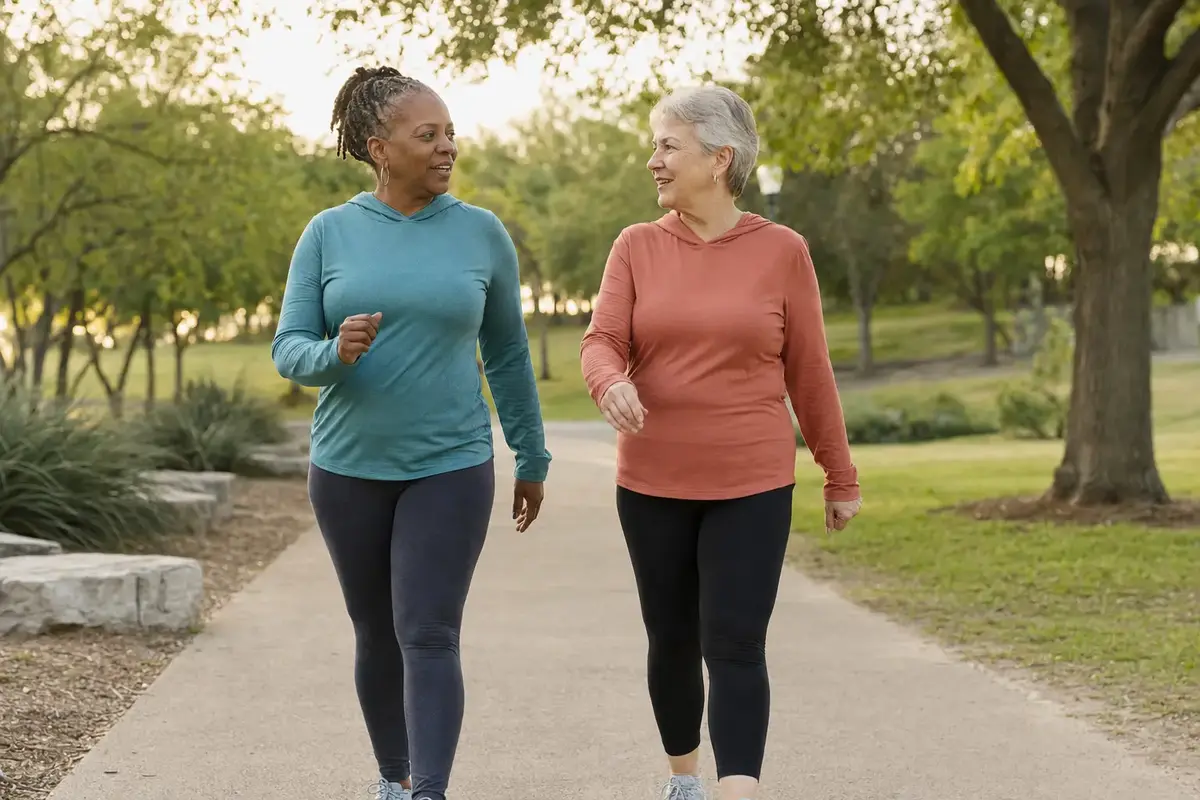
Walking is one of the simplest ways to stay active after 50. It fits almost any schedule and can be adjusted to your fitness level. But when every step brings heel discomfort, arch fatigue, or toe pressure, even a short walk can become something you avoid.
The right footwear cannot diagnose or cure a foot condition. It can, however, provide cushioning, stability, room, and support that make everyday movement more comfortable. Understanding what your feet need is an important first step toward walking more consistently.
Affiliate disclosure: Over50FitLife may earn a commission if you purchase through a qualifying link in this article, at no additional cost to you. Recommendations are presented for education and practical comparison; individual results and fit will vary.
Why Foot Discomfort Can Become More Noticeable After 50
Feet change over time. Natural cushioning may become less effective, arches can flatten, joints may grow stiffer, and old problems can become more noticeable. Activity level, body weight, balance, circulation, arthritis, diabetes, and previous injuries can also affect comfort.
Shoes play a role as well. A pair that once felt fine may now be worn down, too narrow, or unable to support the way your foot moves. Uneven outsole wear, a compressed midsole, or a loose heel can change how force travels through the foot and leg.
This is why choosing supportive shoes for adults over 50 should be based on fit and function—not simply appearance or the word “comfort” on the box. A supportive shoe should feel secure without squeezing, allow your toes to move, and remain comfortable during the activities you actually perform.
Plantar Fasciitis and Heel Pain: What May Be Happening
The plantar fascia is a strong band of tissue along the bottom of the foot that helps support the arch. When irritated, discomfort is commonly felt near the heel. Plantar fasciitis pain is often more noticeable with the first steps after getting out of bed or sitting, although symptoms vary.
Heel pain is not always plantar fasciitis. It may also be related to the Achilles tendon, arthritis, nerve irritation, a stress injury, a loss of natural cushioning, or another condition. That is why persistent or worsening pain deserves professional evaluation rather than self-diagnosis.
The American Academy of Orthopaedic Surgeons notes that supportive shoes, cushioning, and orthotic inserts may reduce stress on the plantar fascia during standing and walking. These measures are supportive tools, not guaranteed cures, and they work best when matched to the person and the cause of the symptoms.
Seek medical care promptly for severe pain, significant swelling, redness or warmth, numbness, a wound that is not healing, an inability to bear weight, or pain following an injury. People with diabetes, circulation problems, or reduced sensation should be especially cautious about new foot symptoms.
What to Look for in Walking Shoes After 50
The best walking shoes for over 50 are not necessarily the softest. Too little structure may feel unstable, while an overly rigid or poorly shaped shoe may create pressure. Look for a practical balance of comfort and support.
Use this checklist when trying on shoes:
- A secure heel: Your heel should not repeatedly slide or lift while walking.
- Enough toe room: Your toes should lie naturally without rubbing the sides or front.
- Comfortable arch contact: Support should feel steady, not like a hard lump pushing into your foot.
- Cushioning under the heel and forefoot: Cushioning can help manage impact, but it should not feel unstable.
- A stable, nonslip outsole: Traction matters on sidewalks, smooth floors, and wet surfaces.
- A removable insole: This can be useful if you need a different over-the-counter or prescribed orthotic.
- The right width and volume: Length alone does not determine fit. Some feet need a wider toe box or more room over the instep.
Try shoes later in the day and wear your usual walking socks. Test both shoes because one foot may be larger. Walk for several minutes and notice heel movement, toe pressure, arch contact, and stability. Do not assume a painful pressure point will disappear after breaking them in.
The National Institute on Aging also recommends well-fitting footwear with appropriate heel and arch support, adequate toe room, and nonskid soles for staying active safely.
Where WalkHero May Fit Into Your Options
Some adults prefer footwear or insoles designed with built-in arch support and cushioning for daily errands, work, travel, and recreational walking. WalkHero walking shoes are one practical option to consider if you are comparing comfortable walking shoes with supportive features.
The important question is whether the shape, width, arch position, cushioning, and stability work for your feet. Start with shorter periods indoors, where the return policy permits, and check for rubbing, numbness, pressure, or increasing discomfort.
An insole changes a shoe’s internal fit. Adding support to an already tight shoe may reduce toe room or raise the heel. Make sure the shoe remains secure and roomy enough. Certain conditions may require clinician-guided custom orthotics.
Build Your Walking Routine Without Overloading Your Feet
Comfortable footwear helps, but a sudden jump in walking volume can still irritate the feet and lower legs. Build gradually so your muscles and connective tissues have time to adjust.
Try these practical habits:
- Begin with a manageable route. Ten comfortable minutes is more useful than forcing a long walk that leaves you sore for days.
- Add time slowly. Increase one variable at a time—duration, pace, hills, or frequency.
- Warm up for two or three minutes. Start at an easy pace and let your stride loosen naturally.
- Use shorter steps on hills. This may feel more controlled and place less demand on the calves and feet.
- Alternate routes and surfaces. Repeatedly walking on the same slanted roadside can load each foot differently.
- Check your response later. Notice how your feet feel during the walk, that evening, and the next morning.
- Replace worn footwear. A shoe may look acceptable on top even when its cushioning or outsole has broken down.
Gentle calf and foot mobility may feel helpful, but stretching should not be sharp or aggressive. If symptoms increase from one walk to the next, reduce the distance or pace and address the problem early.
Keep Comfort in Service of the Bigger Goal
The purpose of supportive footwear is to make regular movement more realistic. Walking can support endurance, independence, confidence, and everyday activity—but only if the routine is comfortable enough to repeat.
Think of footwear as one part of a larger plan that includes gradual progression, strength and balance training, recovery, and attention to persistent symptoms. If you are exploring arch support shoes for walking, compare the available styles with your foot shape, usual activities, and comfort needs. Start gradually and let your feet—not marketing language—tell you whether the fit is right.
This article provides general educational information and is not medical advice. A healthcare professional or qualified foot specialist can evaluate persistent pain, numbness, swelling, wounds, or changes in walking.