
The Bottom Line First
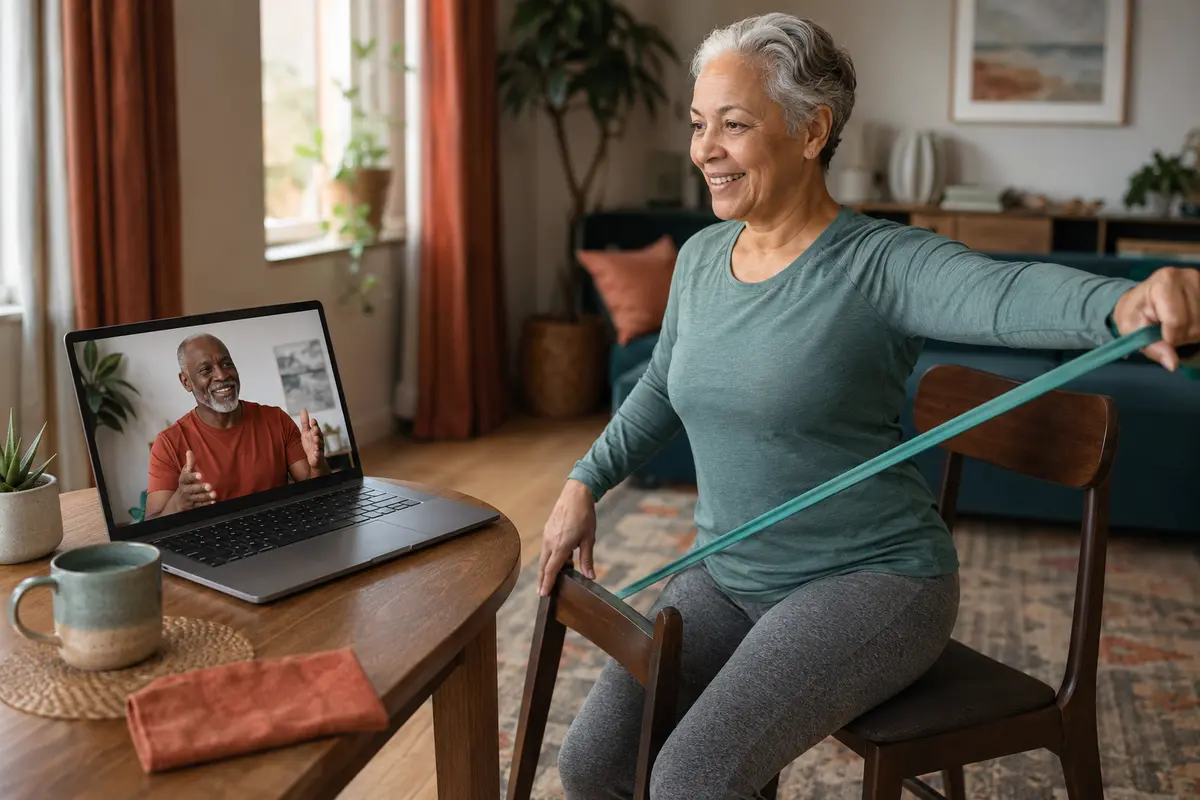
Online exercise can improve strength and physical function after 60, but a video library alone is not a complete program. Effective remote coaching includes appropriate screening, exercises that fit the person and space, planned progression, regular feedback, adherence support, and simple functional measurements. Technology is only the delivery method; the program design still determines the result.
What Current Research Says
A 2025 systematic review and meta-analysis examined 28 videoconference exercise studies involving 2,086 adults over 65. Compared with no intervention, remote programs improved physical function, strength, emotional status, and quality of life. Average attendance was about 80%, and completion was about 93%.
Those results are encouraging, but the review also found small studies, varied outcome measures, and uneven research quality. “Online works” does not mean every app, livestream, or prerecorded plan works equally well.
The Six Parts of a Strong Remote Program
| Program feature | What it should look like |
|---|---|
| Screening | Health history, falls, symptoms, limitations, equipment, and goals reviewed before hard training |
| Individualization | Exercises and ranges matched to current ability |
| Progression | A written method for adding reps, resistance, range, sets, or complexity |
| Feedback | Regular form review, questions, and adjustments |
| Adherence support | Schedule, reminders, minimum-day plan, and accountability |
| Measurement | Repeatable tests tied to daily function |
1. Start With Screening, Not a Workout Link
A responsible program should ask about:
- Exercise history and current activity
- Recent falls, dizziness, chest symptoms, or unusual shortness of breath
- Joint replacements, osteoporosis, arthritis, or persistent pain
- Neurologic conditions and balance limitations
- Available floor space, chair stability, and equipment
- Medical restrictions and clinician guidance
Remote fitness coaching is not physical therapy or medical diagnosis. When symptoms or conditions fall outside a coach’s scope, referral is part of good coaching—not a failure of the program.
2. Match the Exercise to the Person
An effective program provides levels. A squat pattern might begin as a supported sit-to-stand, progress to a lower chair, and later become a goblet squat. A pushing movement might begin at a wall, progress to a countertop, and later use dumbbells or a machine.
Good modifications change the demand while preserving the training goal. Simply saying “go slower” is not always enough.
3. Make Progression Visible
Repeating the same easy class indefinitely may maintain a habit, but it is unlikely to maximize strength. Progress should be measurable.
Useful progression options include:
- Add one or two controlled repetitions.
- Increase resistance by a small amount.
- Add a set after recovery is predictable.
- Improve a comfortable range of motion.
- Use less hand support during an appropriate balance drill.
- Increase walking or cycling time gradually.
Only change one major variable at a time. The program should also include easier sessions or weeks when fatigue accumulates.
4. Provide Feedback That Changes the Plan
Live videoconferencing can let a coach observe setup, pacing, and obvious compensations. Prerecorded programs can still include feedback through scheduled calls, short form-check videos, training logs, or messages.
Useful feedback answers:
- Is the target muscle doing the work?
- Is the range comfortable and controlled?
- Is the exercise too easy, too hard, or simply wrong for this person?
- Are symptoms settling between sessions?
- What changes next week?
Feedback should lead to decisions—not just encouragement.
5. Design for Adherence
The best theoretical plan fails when it does not fit a real week. Strong remote programs include:
- A regular training schedule
- Sessions of realistic length
- A shorter “minimum day” option
- Equipment alternatives
- Clear instructions for missed sessions
- Social or coach accountability when desired
Technology should reduce friction. Complicated logins, tiny text, unclear camera angles, and frequent equipment changes make adherence harder.
6. Measure Function, Not Just Scale Weight
Choose a few repeatable measures and reassess every four to eight weeks.
| Measure | What it can show |
|---|---|
| 30-second chair stand | Lower-body strength and function |
| Timed Up and Go | Mobility and turning ability |
| Comfortable walking time | Aerobic capacity and confidence |
| Supported balance hold | Balance progression |
| Training repetitions or resistance | Strength progress |
| Daily-task rating | Whether stairs, groceries, or floor transfers feel easier |
Testing should be performed in a safe environment with stable support when needed. A test is not worth doing remotely if the person cannot perform it safely.
Red Flags in an Online Program
Be cautious when a service:
- Promises rapid reversal of aging or guaranteed pain relief.
- Gives everyone the same plan regardless of health history.
- Has no clear progression system.
- Encourages pushing through sharp or worsening pain.
- Uses “senior” as a substitute for qualified instruction.
- Offers no way to ask questions or report symptoms.
- Treats more sweat as the only sign of progress.
Coach Bob’s Takeaway
Remote exercise can be convenient and effective after 60. The strongest version is not merely a screen full of workouts. It is a responsive coaching system that helps you begin at the right level, improve gradually, and measure the abilities that protect independence.
Want a plan built around your joints, experience, equipment, and goals? [Start with a free Over50FitLife consultation](/work-with-me).
Research Sources
- 2025 videoconference exercise systematic review and meta-analysis
- 2026 review of remote exercise snacking and functional outcomes
This article is educational and does not replace medical care, physical therapy, rehabilitation, or emergency evaluation. Stop exercise and seek appropriate help for chest pain, fainting, severe dizziness, sudden weakness, new numbness, or unusual shortness of breath.