
The Bottom Line First
For many healthy adults over 50, a practical protein target is 1.0–1.2 grams per kilogram of body weight per day. Adults who strength train regularly or are trying to preserve muscle during weight loss may benefit from approximately 1.2–1.6 g/kg/day when medically appropriate. Spread protein across meals rather than saving most of it for dinner.
That is a range—not a prescription for everyone. Kidney disease, liver disease, frailty, poor appetite, medications, and clinician-directed diets can change the appropriate target.
Why Protein Matters More After 50
Muscle tissue becomes somewhat less responsive to the same meal and training signals with age. This is often called anabolic resistance. Resistance training remains the primary signal to maintain or build muscle, while protein supplies the amino acids used for repair and adaptation.
Protein alone does not build strong, functional muscle. The useful combination is:
- Progressive resistance training
- Enough total protein and calories
- Adequate recovery and sleep
- Consistency over time
Start With the Numbers
The adult Recommended Dietary Allowance is 0.8 g/kg/day. That level is intended to prevent deficiency in most healthy adults; it is not necessarily the ideal target for every older or physically active person.
Expert groups focused on healthy aging commonly suggest 1.0–1.2 g/kg/day for healthy older adults. A range of 1.2–1.6 g/kg/day is often used for adults who strength train, are recovering from inactivity, or need to protect lean tissue during weight loss—provided their medical situation supports it.
Convert Pounds to Kilograms
Divide body weight in pounds by 2.2, then multiply by your target.
Example: A 175-pound adult weighs approximately 80 kilograms.
- 80 × 1.0 = 80 grams per day
- 80 × 1.2 = 96 grams per day
- 80 × 1.6 = 128 grams per day
Example Daily Ranges
| Body weight | Healthy-aging range (1.0–1.2 g/kg) | Active/strength-training range (1.2–1.6 g/kg) |
|---|---|---|
| 150 lb | 68–82 g | 82–109 g |
| 175 lb | 79–95 g | 95–127 g |
| 200 lb | 91–109 g | 109–145 g |
| 225 lb | 102–123 g | 123–163 g |
These examples use total body weight and may overestimate needs for some people at higher body-fat levels. A registered dietitian or clinician can help choose a more appropriate reference weight and target.
Aim for Protein at Each Main Meal
Many adults eat little protein at breakfast, a moderate amount at lunch, and most of the day’s protein at dinner. A more even pattern may make it easier to reach your goal and provide repeated opportunities for muscle-protein synthesis.
A practical starting point is approximately 25–35 grams at each main meal, adjusted for body size, appetite, total target, and health needs. Larger adults or those using the higher daily range may need more.
You do not have to hit an exact number at every meal. Think in ranges and review the full day.
Five Easy High-Protein Meal Ideas
Protein values vary by product and serving size, so check labels when accuracy matters.
1. Greek Yogurt Breakfast Bowl — About 25–35 Grams
Combine:
- 1 cup of high-protein Greek yogurt
- Berries or sliced fruit
- Chia seeds or walnuts
- Optional small serving of higher-protein cereal
Choose an unsweetened or lower-added-sugar yogurt when that fits your preferences.
2. Eggs and Cottage Cheese Plate — About 25–35 Grams
Serve:
- 2 eggs
- 1/2 to 1 cup cottage cheese
- Whole-grain toast
- Tomato, spinach, peppers, or fruit
Use lower-sodium cottage cheese when advised to limit sodium.
3. Chicken, Tuna, or Tofu Wrap — About 30–40 Grams
Fill a whole-grain wrap with:
- Chicken breast, tuna, or seasoned tofu
- Greens and chopped vegetables
- Greek-yogurt dressing, hummus, or avocado
Add beans if you need more protein and fiber.
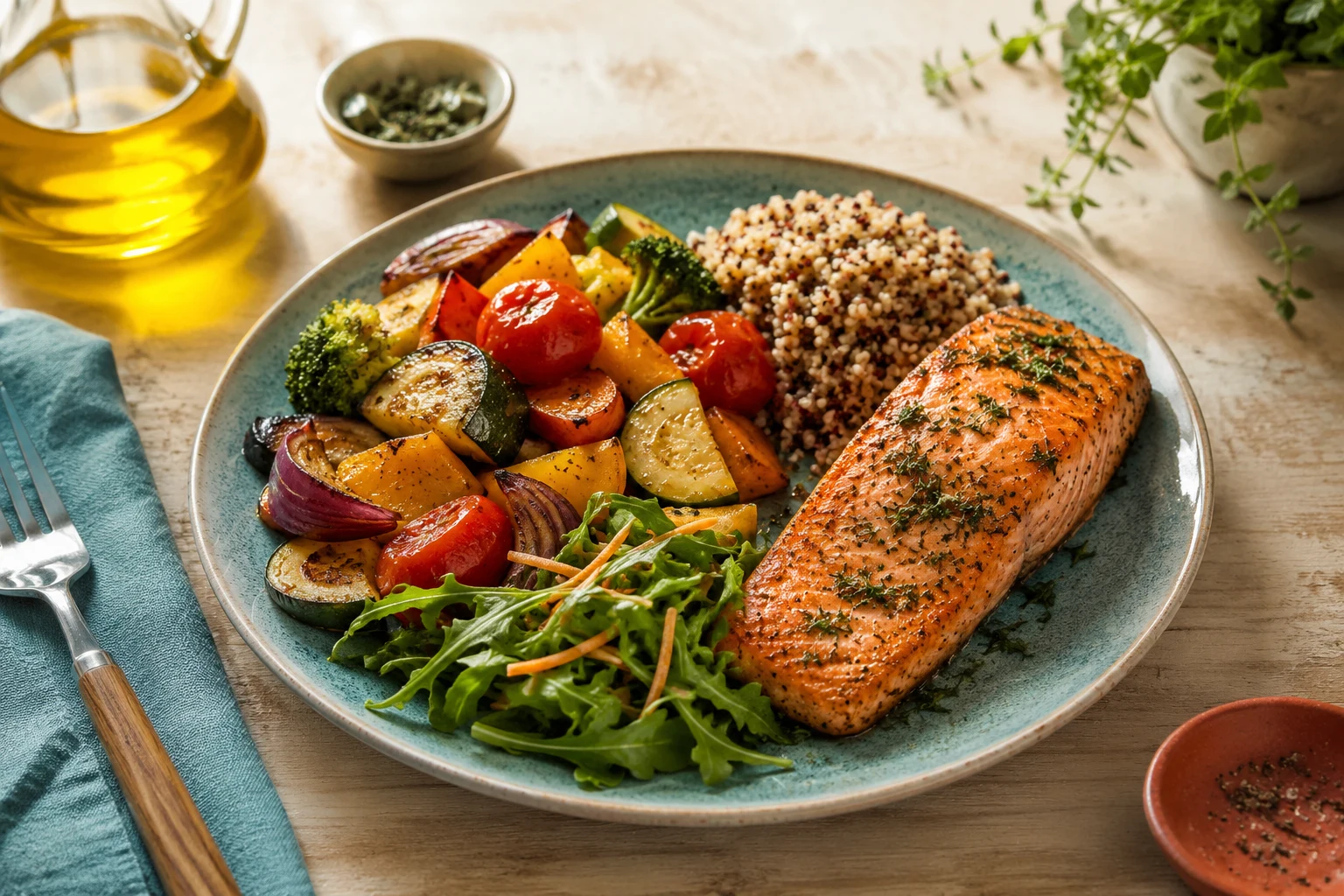
4. Salmon or Lean Protein Dinner — About 30–45 Grams
Build the plate around:
- Salmon, chicken, lean meat, tempeh, or another protein you tolerate
- Two vegetables or a vegetable and fruit
- Potatoes, brown rice, quinoa, or another preferred carbohydrate
The protein amount depends heavily on portion size. A food scale can be useful temporarily, but it is not required forever.
5. Lentil and Edamame Power Bowl — About 25–35 Grams
Combine:
- Lentils
- Shelled edamame
- Quinoa or another whole grain
- Chopped vegetables
- A yogurt, tahini, or lemon-herb dressing
This plant-forward meal also provides fiber. Increase fiber gradually and stay hydrated if your usual intake is low.
What About Protein Shakes?
A shake can be convenient when appetite, time, chewing difficulty, or travel makes food harder. It is not automatically better than whole food.
Use a shake to close a genuine gap rather than adding it on top of an already adequate diet. Look for a product with a clear ingredient list and an amount that fits your daily target. Supplements can interact with health conditions and medications, and quality varies.
Protein During Weight Loss
Weight loss can include lean tissue as well as fat. Adults over 50 should pair medically appropriate weight loss with resistance training and adequate protein rather than focusing only on the scale.
This is especially important when appetite is reduced by a prescribed GLP-1 medication. Discuss persistent low intake, rapid weight loss, weakness, or difficulty meeting nutritional needs with the prescribing clinician.
When a Higher-Protein Target May Be Wrong
Do not adopt a high-protein plan without individualized guidance if you have:
- Chronic kidney disease or abnormal kidney function
- A clinician-directed protein restriction
- Significant liver disease
- Abnormal potassium or phosphorus levels
- Difficulty swallowing or severe appetite loss
- A medical condition or medication that changes nutrition needs
More is not always better. Once protein intake is adequate, additional powder or oversized portions do not replace training, sleep, or overall diet quality.
Coach Bob’s Takeaway
For nutrition after 50, begin with a sensible range, distribute protein across the day, and build meals from foods you enjoy. If your goal is muscle building after 50, pair that intake with progressive resistance training. The best high-protein meals over 50 are the ones that fit your health needs and are easy enough to repeat.
Want help turning your target into realistic meals? [Explore NutriPlanPro 50+](/nutriplanpro) for practical meal-planning support designed around life after 50.
Sources
- PROT-AGE Study Group: Evidence-based recommendations for optimal dietary protein intake in older people
- ESPEN practical guideline: Clinical nutrition and hydration in geriatrics
- International Society of Sports Nutrition position stand: Protein and exercise
This article is for general education and is not medical advice. Protein needs can change substantially with kidney disease, liver disease, frailty, medications, and clinician-directed diets.