The Bottom Line First
The most useful healthy habits after 50 are often small enough to repeat on busy, tired, or achy days. A short walk, a protein-forward breakfast, two minutes of joint preparation, a supported balance drill, and a simple evening setup can make fitness after 50 feel less like a project and more like part of everyday life.
Big goals can be motivating, but daily behavior is what carries them. The five tiny habits below are designed to reduce friction. You do not need to complete them perfectly or turn every one into a workout.
What Makes a Habit “Tiny”?
A tiny habit has three parts:
- A reliable cue you already encounter, such as finishing breakfast or brushing your teeth.
- A small action you can complete even on a difficult day.
- A clear finish line so the habit does not feel endless.
Start with the minimum version. You can always do more when energy and time allow.
Habit 1: Take a Five-Minute Movement Snack
The cue: Finish a meal, end a meeting, or return from the bathroom. The minimum: Walk or move comfortably for five minutes.
This can be a walk through the neighborhood, laps through the house, gentle marching near a counter, or easy cycling. The purpose is not to burn a dramatic number of calories. It is to interrupt long periods of sitting and make movement a normal part of the day.
Make it joint-friendly:
- Choose a flat, predictable surface.
- Wear supportive shoes when needed.
- Keep the pace comfortable enough to talk.
- Use seated marching or an indoor pedal device when walking is not comfortable.
Progression: Add one additional five-minute movement snack before making any single session much longer.
Habit 2: Put a Protein Source on the Plate First
The cue: Begin preparing breakfast, lunch, or dinner. The minimum: Identify the meal’s protein source before adding the rest.
Protein supports muscle maintenance, recovery, and satisfaction after meals. This habit does not require weighing every bite. Ask one question: “Where is the protein?”
Easy choices include:
- Eggs or Greek yogurt at breakfast
- Chicken, tuna, beans, tofu, or cottage cheese at lunch
- Fish, lean meat, lentils, tempeh, or dairy at dinner
If the meal already contains protein, the habit is complete. If it does not, add a realistic option you enjoy.
Make it easier: Keep two convenient choices available, such as Greek yogurt in the refrigerator and tuna or beans in the pantry.
Habit 3: Prepare Your Joints for Two Minutes
The cue: Put on your workout shoes or enter your exercise space. The minimum: Spend two minutes preparing the joints you plan to use.
Before a walk or lower-body session, try:
- 20 seconds of ankle rocks while holding a support
- 5 controlled sit-to-stands from a comfortable chair
- 5 gentle hip hinges with hands on the thighs
Before upper-body training, try:
- 5 slow shoulder-blade squeezes
- 5 comfortable wall slides or wall reaches
- 5 easy wall push-ups
A warm-up should make movement feel more prepared—not create fatigue or force painful ranges.
Make it joint-friendly: Use a smaller range when a joint feels stiff. Stop for sharp pain, instability, numbness, or symptoms that worsen with each repetition.
Habit 4: Practice Balance While the Coffee Brews
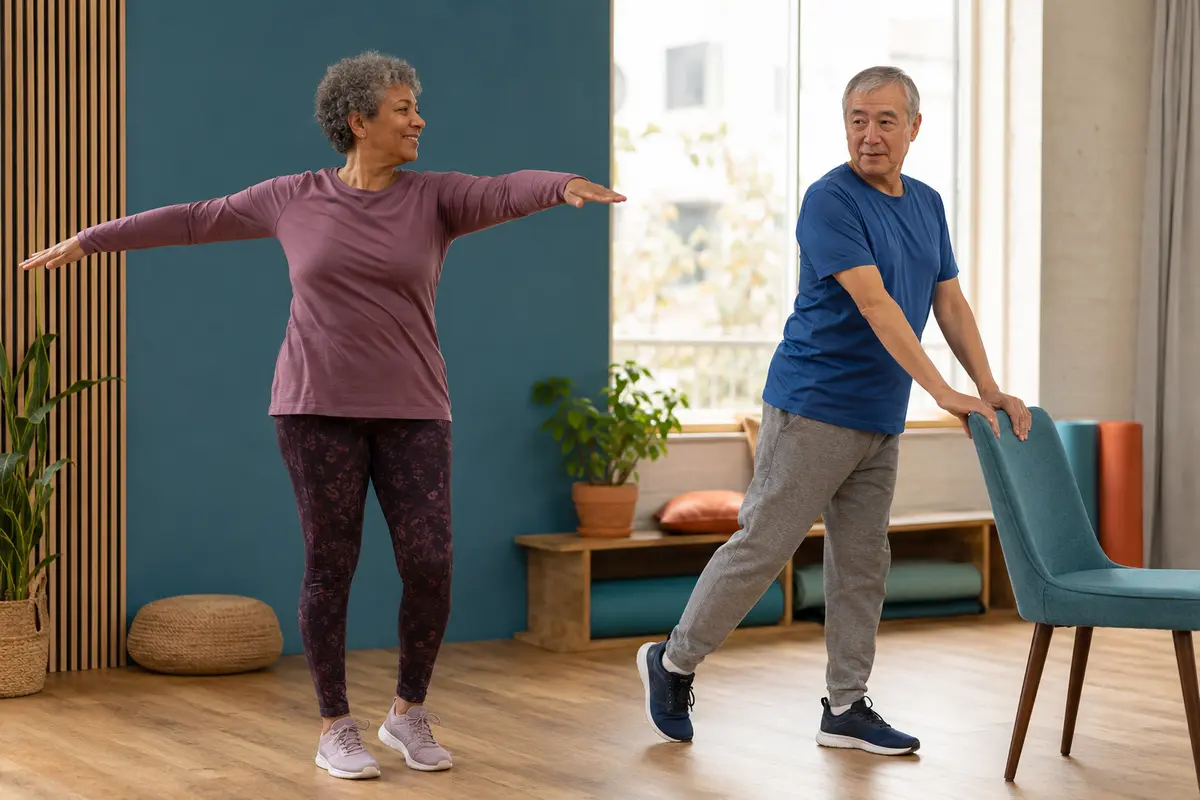
The cue: Wait for coffee, tea, the microwave, or the sink to fill. The minimum: Practice balance for 20–30 seconds beside a sturdy counter.
Choose one level:
- Stand with feet close together.
- Place one foot slightly ahead of the other.
- Hold a supported single-leg stance for a few seconds per side.
Keep one or both hands near the counter. Balance training is not a contest, and closing your eyes is unnecessary.
Progression: Use slightly less hand pressure or add a few seconds while keeping the support within reach.
Safety: Do not practice unsupported near stairs, clutter, pets, or a slippery floor. If you have repeated falls, significant dizziness, or new balance problems, seek appropriate medical evaluation.
Habit 5: Set Up Tomorrow Before Bed
The cue: Finish brushing your teeth at night. The minimum: Prepare one thing that makes tomorrow’s healthy choice easier.
Examples:
- Put walking shoes by the door.
- Set a resistance band beside your chair.
- Place a water bottle where you will see it.
- Decide which two exercises you will perform.
- Prepare a protein-rich breakfast or snack.
This is an environment habit. It reduces the number of decisions required when you are tired or rushed.
A Simple Daily Checklist
| Daily habit | Minimum version |
|---|---|
| Movement snack | Move comfortably for 5 minutes |
| Protein first | Name the meal’s protein source |
| Joint preparation | Warm up for 2 minutes |
| Balance practice | 20–30 seconds near support |
| Tomorrow setup | Prepare one helpful item |
Do not add all five at once if that feels overwhelming. Choose one habit, repeat it for a week, and then add another.
What If You Miss a Day?
Missing once is normal. Restart with the minimum version at the next available cue. Avoid “making up” missed habits with an exhausting workout or restrictive eating. The goal is to return quickly, not to punish yourself.
Coach Bob’s Takeaway
Consistency after 50 is easier when the starting line is close. Five minutes of movement counts. Two minutes of preparation counts. One balanced meal counts. Tiny habits are not the entire fitness plan, but they make the larger plan much easier to sustain.
Want practical healthy-aging guidance delivered to you? [Join the Over50FitLife email community and get the free 4-Week Strength Restart Schedule for 50+](/#newsletter).
This article is for general education and is not medical advice. Ask an appropriate healthcare professional before changing activity when you have a significant cardiovascular, neurologic, bone, joint, balance, or other health condition.